
Over the past few days, I have been reading extensively about the history of human civilization—spanning from prehistory, with the Out of Africa and multiregional origin theories, through Classical Antiquity in Europe (Greece, Rome), the Near and Far East (Mesopotamia, Babylonia, Persia, China, India), Africa (Ancient Egypt), and the Americas (Aztec, Maya, Inca). From there, the narrative moves into the Middle Ages, marked by the fall of the Western Roman Empire and the rapid spread of Christianity. The Catholic Church dominated this era, elevating spiritual themes while often restricting free intellectual inquiry under dogma—a stagnation further compounded by the Black Death. Yet, while Europe waned, the Islamic Golden Age flourished. The Middle Ages eventually gave way to the Renaissance—a rebirth of reason and science fueled by thinkers like Copernicus and Galileo, paving the way for the Aufklärung and, ultimately, our modern world.
However, I feel the need to refocus our discussion back to aesthetic theory. In my previous article, I explored prehistoric artifacts—such as cave paintings and stone axes—which served as the cornerstones of early human concepts of beauty. Building upon that foundation, it is now time to examine the evolution of aesthetic theory in the classical era. This inquiry naturally begins with classical Greek art, where philosophical discourse on beauty and the philosophy of art were first systematically documented.
In entering Greek civilization, we encounter two pivotal periods: the Classical Era and the Hellenistic Era. Let us first examine the historical background of the Classical Era.
The dawn of classical Greek art and culture was marked by the victory of Greek city-states (poleis), notably Sparta and Athens, in repelling the Persian invasions. This victory fostered immense cultural confidence; the Greeks perceived their governance, culture, and intellect as superior to surrounding civilizations. Athens subsequently emerged as a maritime and economic powerhouse, accumulating immense wealth. Under the leadership of Pericles, Athenian democracy reached its pinnacle. Citizens possessed a direct voice in governance and public discourse within the Agora. This atmosphere of intellectual freedom cultivated a rich tradition of debate, rhetoric, and rational inquiry, encouraging people to question dogma rather than accept it blindly.
It was during this golden age that monumental thinkers such as Socrates, Plato, and Aristotle emerged to build the foundations of art and philosophy. A defining hallmark of Greek culture was humanocentrism—placing man as the measure of all things (homo mensura). This worldview fostered an obsession with order, symmetry, rationality, and proportion. Consequently, these philosophical underpinnings shaped their approach to art, steering artistic creation toward the pursuit of harmony, balance, and perfection (approaching nature, which was viewed as a reflection of ideal forms).
Broadly speaking, aesthetic theory in Classical Greece can be synthesized into four core principles: art as technical mastery (techne), art as a rational endeavor, art as an objective and measurable entity, and the emergence of formalist and functional approaches through the paradigm of mimesis (the imitation of the material world).
Starting with the Sophists, Protagoras serves as a foundational figure with his famous maxim: “Man is the measure of all things.” This subjectivist stance posited that all values are contingent upon individual perception, denying the existence of absolute, objective knowledge. Protagoras’ humanocentric perspective later exerted a profound influence on Renaissance art, notably in the application of human scale within perspective systems and architectural proportions.
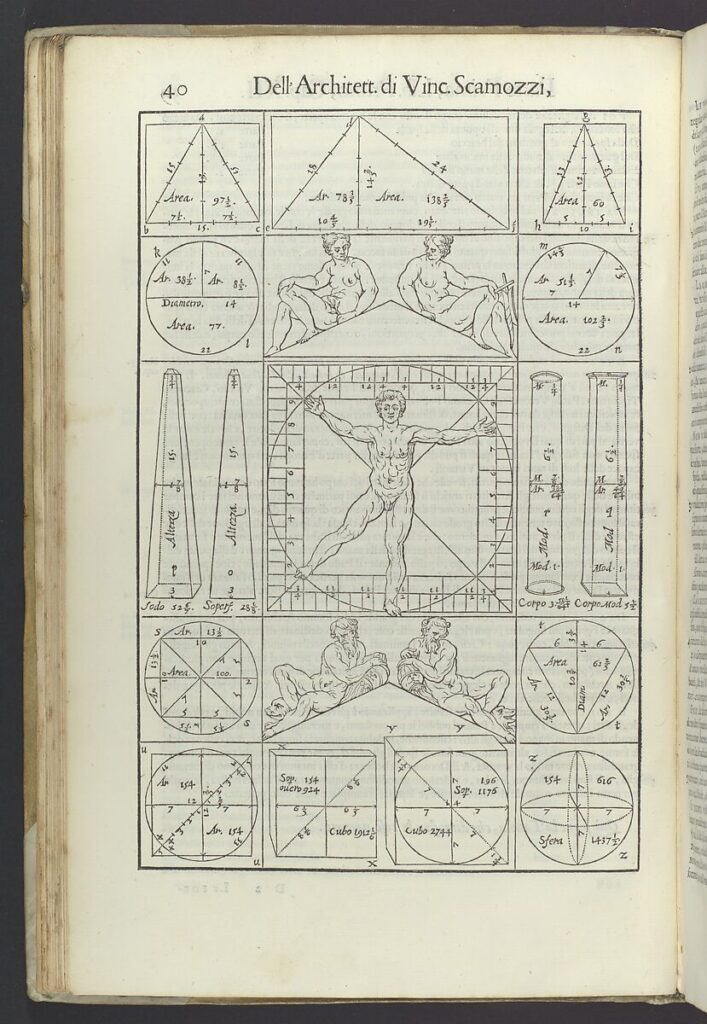
However, the radical subjectivism of the Sophists stood in stark contrast to Socratic philosophy and other objective schools of thought. During the same era, Pythagorean doctrine emphasized measurable, mathematical proportion, while Socrates advocated for universal truths, logical dialectics, and the essence of pure beauty (kalon). In visual culture, this objectivism was personified in classical Greek sculpture by Polykleitos, whose Doryphoros was executed according to precise mathematical calculations (The Canon) rather than personal whim.
This intellectual debate intensified during the era of Plato and his successors. Plato held a deeply critical view of artistic creation, viewing it as fundamentally deceptive. This stance stemmed directly from Plato’s theory of forms, which outlined three distinct layers of reality.
According to Plato’s theory of forms, visual art (mimesis) merely imitates the second layer of reality—physical objects in the material world, which are themselves mere shadows or imitations of the true Forms. Being a “copy of a copy” (three steps removed from ultimate truth), art was seen as prone to distorting reality and misleading the mind.
Nevertheless, Plato conceded that good art had a place in society under strict conditions: it had to be grounded in techne (technical mastery adhering to canons, symmetry, and natural harmony) and serve a moral and ethical purpose for the populace.
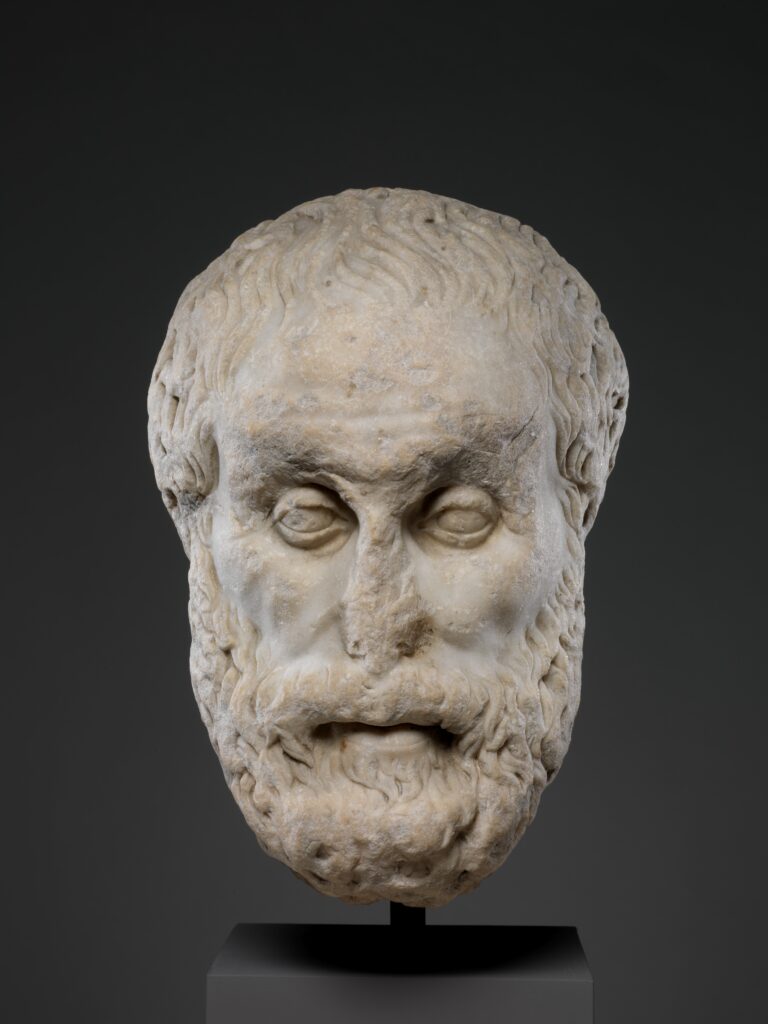
Plato’s framework was subsequently re-evaluated and revised by his student, Aristotle. While Aristotle agreed that art is rooted in mimesis and requires technical discipline, he diverged sharply from his master regarding the function and value of art in his own philosophy of art. For Aristotle, art was neither inherently deceptive nor useless; rather, he viewed mimesis as a natural human instinct for learning and understanding the world. Thus, art could serve as a vital tool for moral and educational instruction.
Furthermore, Aristotle articulated that art—particularly tragic theater—fulfills a crucial psychological and moral function known as Aristotle’s catharsis (the purging, purification, and clarification of emotions) through the audience’s engagement with the narrative. In exploring Aristotle and catharsis, his formal assertion that “beauty is a matter of magnitude and order” often led scholars to label him a forerunner of formalist aesthetics, though this characterization is somewhat reductive when viewed in full context. Aristotle observed that the aesthetic pleasure of tragedy arises from pity (eleos) and fear (phobos), evoked by unmerited misfortune and rooted in a shared love for humanity (philanthropon).
From the treatises of these Classical Greek philosophers, we can discern the bedrock of contemporary aesthetic theory and the modern philosophy of art. It is fascinating to observe how classical Greek art was viewed as a technical discipline (techne) aligned with natural order, while the artist was regarded merely as a craftsman (technites) rather than an autonomous, subjective creator. Artists were bound to strictly observe inherited canons.
Yet, the meaning, value, and reception of art have continually evolved through time. We will explore this ongoing transformation in the next article as we transition into the Hellenistic Era.

I write about art, aesthetics, philosophy,
and the ideas behind my visual work.