Last week, we discussed Classical Greek aesthetics—an era when the Greek city-states (poleis) experienced a golden age across various disciplines after successfully repelling the invasion of the Persian Empire. Classical Greek civilization flourished, giving rise to numerous prominent thinkers.
Following the Classical era, we enter the Hellenistic Era. It was during this period that Greek culture and civilization reached their peak, causing Hellenistic era art and philosophy to spread globally.
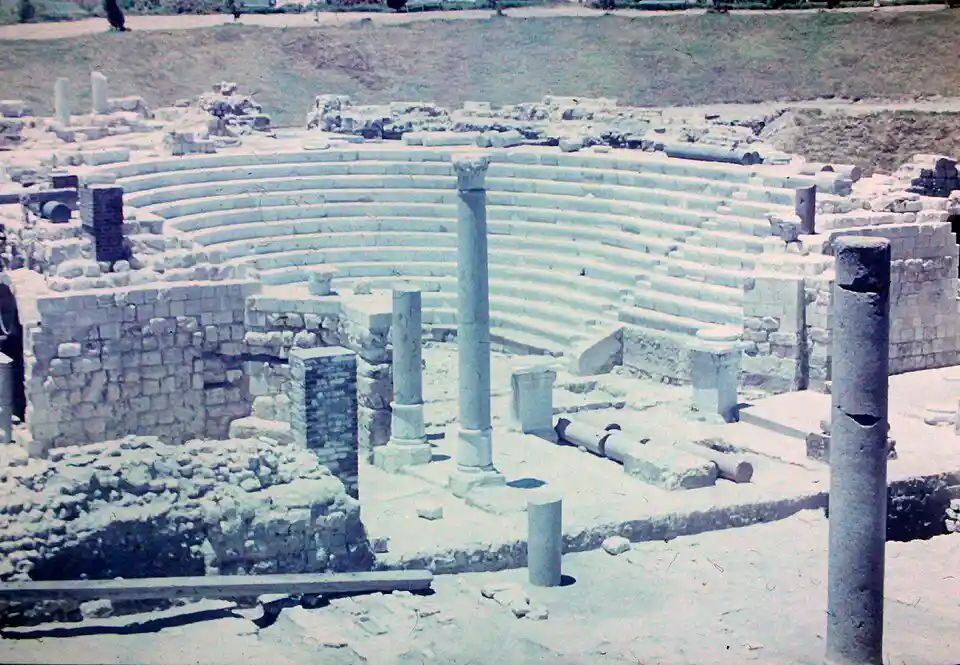
Reference image: Roman Amphitheater in Alexandria (Kom El Dikka). Source: Wikimedia Commons (Public Domain).
Historical & Geopolitical Background of the Hellenistic Era
This era began when Alexander the Great of Macedon succeeded his father, King Philip II (who had conquered the city-states of Southern Greece and unified the region). Alexander successfully defeated the Persian Empire and established control over a vast territory stretching from Egypt, Persia, and Central Asia, all the way to the borders of India (modern-day Pakistan).
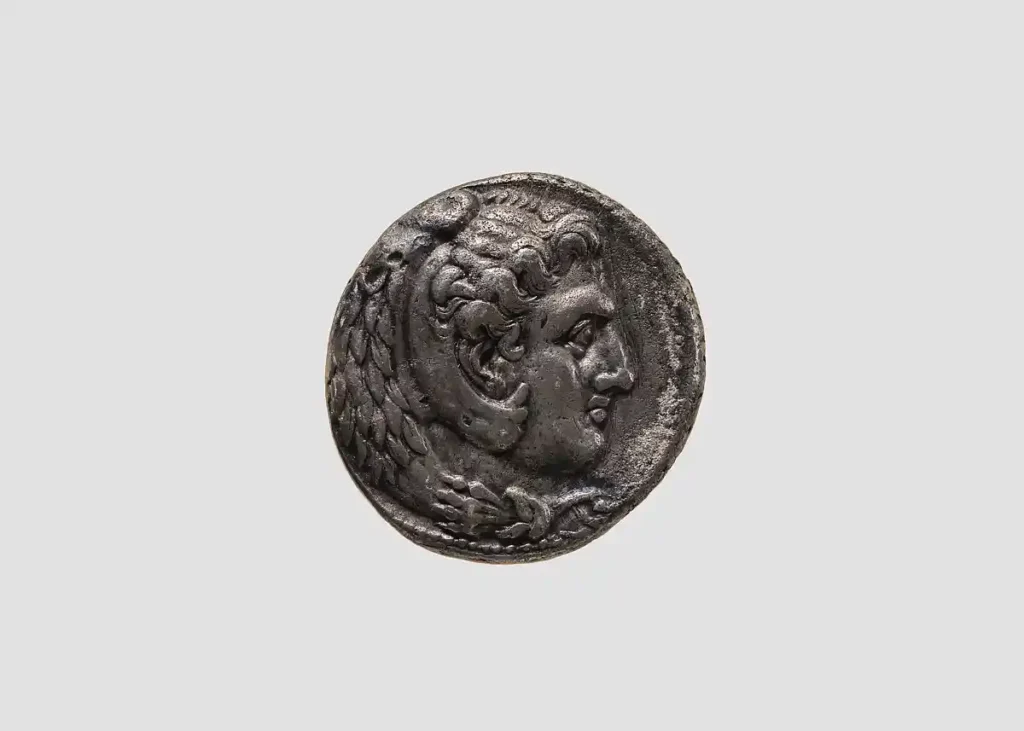
This military conquest triggered a massive dissemination of Greek culture throughout the conquered lands. Interestingly, Alexander’s name was absorbed into Middle Eastern traditions as Iskandar Zulkarnain. The Greek name Alexandros evolved through Persian and Arabic into Iskandar (إiskander / إسكندر). Meanwhile, Zulkarnain in Arabic translates to “the possessor of two horns.” This epithet refers to Hellenistic trade coins depicting Alexander wearing a helmet adorned with ram horns—the symbol of the Egyptian deity Amun, who had consecrated him at his oracle. Metaphorically, the “two horns” also symbolized his dominion over two realms: the West (Greece) and the East (Persia).
However, Alexander’s reign was short-lived. He passed away at a young age in Babylon without leaving a clear heir. Consequently, his generals (Diadochi) fought among themselves, partitioning the empire into several major kingdoms:
The Ptolemaic Dynasty (Egypt)
The Seleucid Empire (Middle East, Persia, and Syria)
The Antigonid Dynasty (Macedonia and Greece)
Silver Tetradrachm of Alexander the Great depicting Herakles in the Nemean lion pelt. Source: The Metropolitan Museum of Art (Open Access / Public Domain).
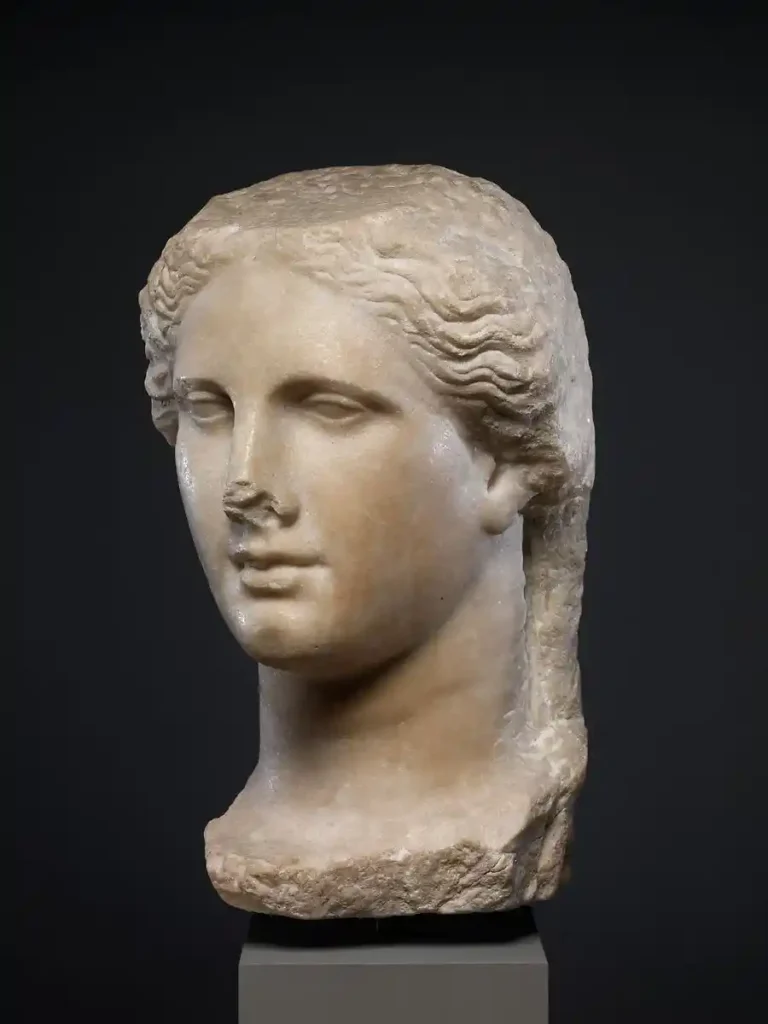
Marble portrait head of a Ptolemaic Queen (3rd–2nd century BCE), exemplifying the blend of classical Greek idealism and individualized portraiture during the Hellenistic Era. Source: The Metropolitan Museum of Art (Open Access).
Cultural & Philosophical Shifts
Although the term Hellenistic derives from Hellas (the native name for Greece), the culture of this era was not purely Greek. Instead, it was defined by acculturation—a synthesis of Greek traditions with the local cultures of the conquered territories across Persia, Egypt, Arabia, and Central Asia.
The geopolitical shift from independent city-states (poleis) to a vast, cosmopolitan empire reshaped the social fabric of the Greek world. In philosophy, while Classical Greece prioritized civic duties, public ethics, and collective logic, the Hellenistic period shifted focus toward individual inner peace (ataraxia). This transition occurred as individuals felt a loss of direct control over the grand politics of a sprawling empire. Out of this environment, philosophical schools such as Stoicism and Epicureanism were born.
Key figures who emerged during this era include:
Archimedes (Mathematician & Physicist)
Euclid (Father of Geometry)
Aristarchus of Samos (Pioneer of the heliocentric model, long before Copernicus)
Zeno, Seneca, & Epictetus (Stoic Philosophy)
Epicurus (Epicurean Philosophy)
Historically, the Hellenistic Era spanned from 323 BCE (the death of Alexander the Great) to 31 BCE (the defeat of the last independent Hellenistic kingdom, Ptolemaic Egypt under Queen Cleopatra VII, by Rome).
Title page of the 1667 German translation of Archimedes' "The Sand Reckoner" (Sand-Rechnung), featuring astronomical diagrams illustrating the heliocentric model of Aristarchus of Samos. Source: Wikimedia Commons (Public Domain).
Key Characteristics of Hellenistic Art: Breaking Free from the Canon
In art and aesthetics, works from this period transformed dramatically compared to the relatively restrained and rigid Classical style. The rigidity of Classical art stemmed from the view that art was merely an imitation of nature (mimesis) and that the artist was simply a craftsman executing a technique (techne).
When examining Hellenistic art characteristics, several crucial aesthetic shifts emerge:
The Re-emergence of Inspiration & the Birth of Creativity: Artists were no longer seen merely as copyists of the visible world, but as creators endowed with imagination (phantasia).
The Separation of Beauty and Utility: Hellenistic thinkers established a clear dichotomy between practical/moral function and aesthetic quality.
Distinguishing Subjective and Objective Dimensions of Beauty: A new awareness developed regarding what makes something objectively beautiful versus how it is subjectively perceived by the viewer.
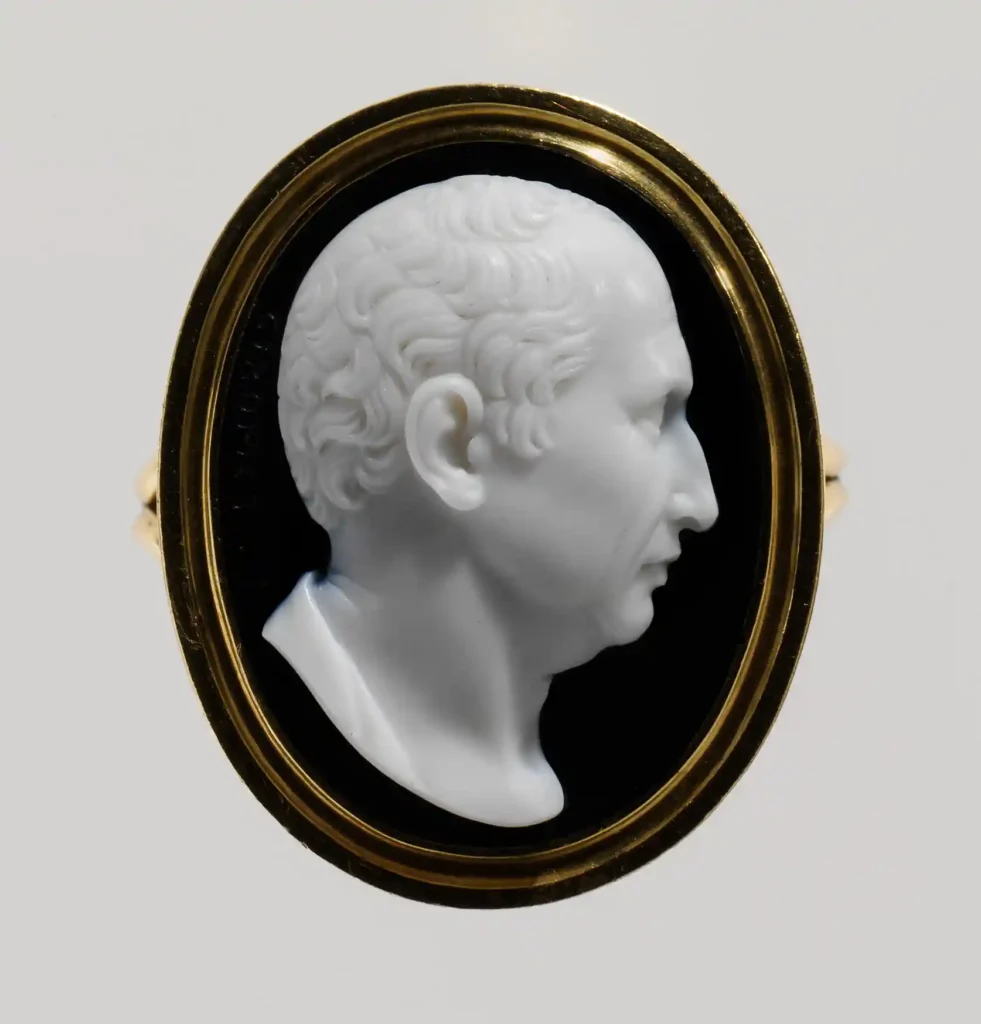
Cameo portrait of the Roman statesman and philosopher Marcus Tullius Cicero, whose writings bridged Greek Hellenistic aesthetics with Roman thought. Source: The Metropolitan Museum of Art (Open Access).
Artists in this era gained the privilege to explore any subject or Hellenistic style art they desired, breaking away from the strict adherence to the Canon (rules of proportion and idealism) that governed previous generations. The belief that an artist’s fundamental ability lay in creation rather than mere imitation afforded them unprecedented creative freedom.
To contrast: Classical Greek aesthetics asserted that art must mirror good character and thus serve a moral purpose (kalon). In contrast, the Hellenistic period severed the link between beauty and utility:
Philodemus rejected the notion that beautiful, pleasant music must reflect moral virtue.
Eratosthenes argued that the purpose of poetry was to evoke pleasure rather than to instruct morality.
Cicero affirmed the objective dimension of aesthetics, stating that what is beautiful remains beautiful regardless of whether it pleases everyone.
The Emotional Realism of Hellenistic Sculpture
Perhaps the most famous manifestation of this transformation can be seen in Hellenistic sculpture. Unlike Classical statues that favored calm, idealized, and emotionless figures, sculptors in the Hellenistic age embraced theatricality, movement, and dramatic realism.
From intricate drapery and muscular tension to depictions of agony, old age, and vulnerability, Hellenistic sculpture captured the human condition in its full emotional complexity. Sculptures were no longer designed to be viewed passively from a single front angle; instead, dynamic spiral compositions invited viewers to walk around the artwork and experience its narrative from every dimension.
Conclusion & Looking Ahead
The transition from Classical to Hellenistic Greece demonstrates a profound shift in values, driven by changes in historical, social, and political contexts. Hellenistic art effectively bridged the gap between rigid idealism and emotive, individualist expression.
In upcoming articles, we will dive deeper into the ideas of specific Hellenistic aesthetic thinkers, such as:
Cicero and his theory of aesthetic decorum (decorum).
Philodemus as an early pioneer of formalist thought.
Horace and the concept of form following function, which laid early groundwork for modern design theory.
Longinus, whose writings on the Sublime (the sublime), emotion, and contemplation prefigured Romanticism.
Vitruvius, who made monumental contributions to architectural theory and canonical human proportions rooted in mathematics.
The fine art principles we live by today are deeply rooted in these early aesthetic debates. While some ideas evolved alongside science and societal shifts, others continue to be recycled and rediscovered. Diving into the history of aesthetics remains a fascinating journey!
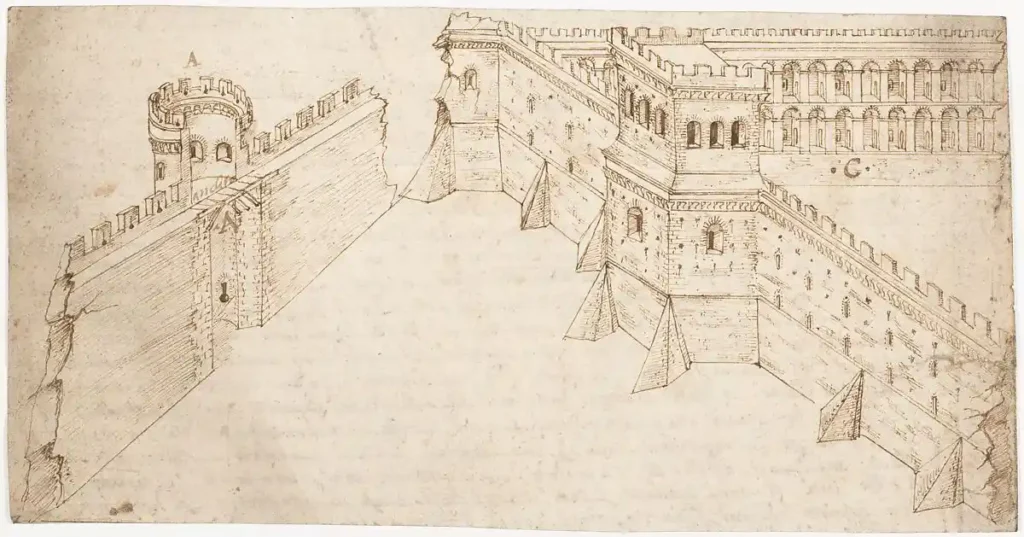
Architectural drawing illustrating Vitruvius’s "De Architectura" (Book 1, Chapter 4), depicting city wall fortifications and towers. Source: The Metropolitan Museum of Art (Open Access).
Written by Hans Kristo
Artist & Writer Pop Surrealism, Romantic Grotesque
I write about art, aesthetics, philosophy, and the ideas behind my visual work.