
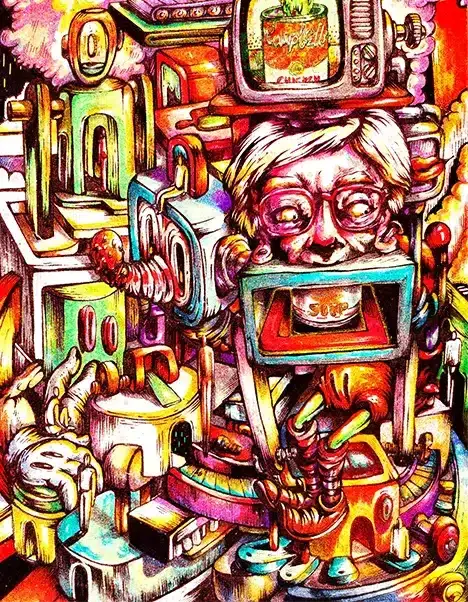
When we talk about pop culture or popular culture, we cannot separate it from everyday life and the collective taste of society — something familiar, approachable, and grounded. It grows from daily habits, from what people consume and enjoy, from things that feel close to the majority of us. Yet, we also cannot overlook its origins in America and the Western world.
The term popular culture first emerged alongside the rise of consumerism and the advertising industry. Advertising became a symbol of its time — not merely a tool of promotion, but a mirror of lifestyles, carefully packaged to appear ideal. During the modern era, the cultural and artistic center undeniably came from the West, establishing itself as a universal standard. The global flow of media and commerce reinforced that dominance, spreading values and aesthetics that shaped the world’s perception of what it means to be “modern” or “valuable.”
However, as we moved into the era of postmodernity and the internet, the direction of culture began to shift dramatically. The world no longer moved in a single line; communication became multidirectional, and individuals were free to shape their own choices and identities. This celebration of difference brought about visible fragmentation — and truth itself became relative, ushering in what many call the post-truth era.
This phenomenon is often referred to as digital tribalism: the formation of new ideological and emotional “tribes” among netizens, each with its own beliefs and identities. Social media has created echo chambers — spaces where people hear only what they already agree with. As a result, social polarization has deepened, even in spaces once thought to be neutral.
In the context of art and culture, popular culture has also adapted. It no longer focuses solely on the glorification of icons or idealized imagery but opens itself to diversity in form and meaning. Local traditions, vintage aesthetics, subcultures, and once-forgotten narratives are being reimagined through eclectic expressions.
Pop culture today mirrors hybridity — a blend of the old and the new, the mainstream and the marginal. This transformation reflects how postmodernity reshapes cultural identity through remixing, recontextualization, and reinterpretation.
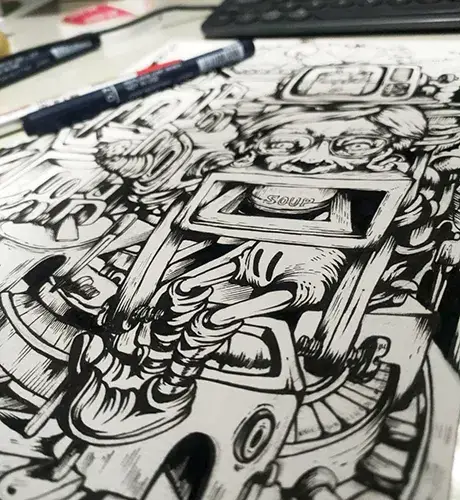
In this work, I seek to portray how the old form of pop culture slowly decays with time. It still exists as a visual artifact, yet much of its original meaning has faded amid the shifting landscape of values and taste.
Pop culture now stands at a point of synthesis — fragmented, blended, and transformed into new forms that reflect the continuous evolution of society, ideology, technology, and politics.