
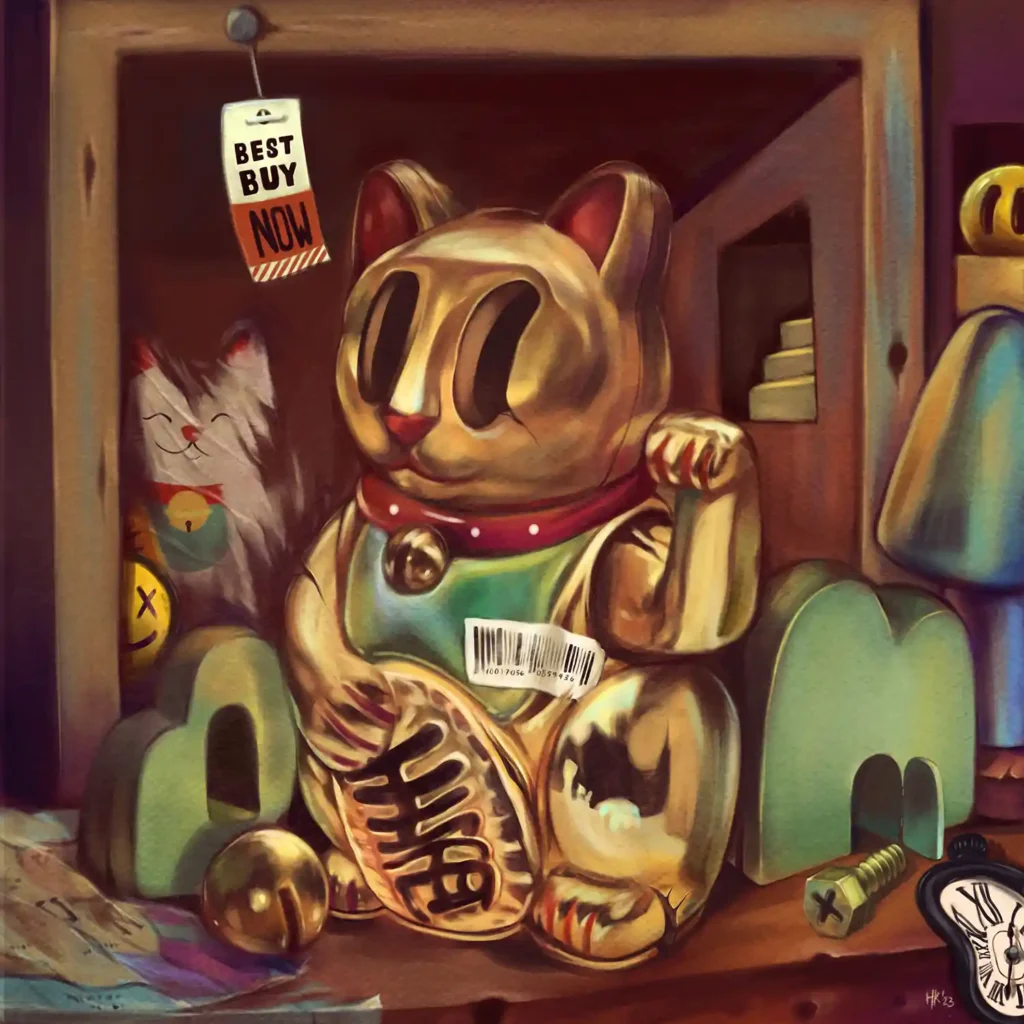
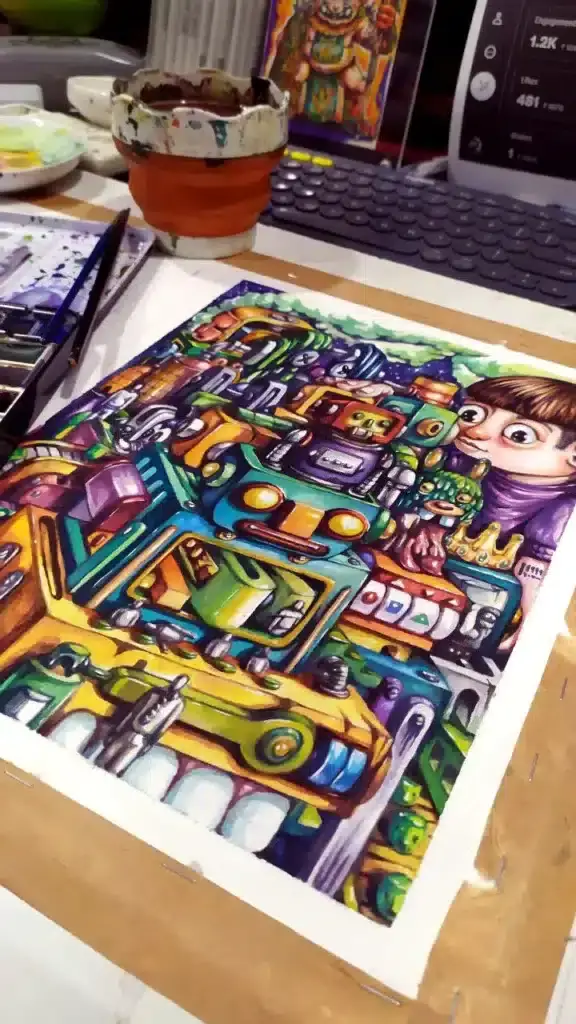
The history of contemporary art is no longer anchored to a single, monolithic entity. Instead, it has evolved into a rapidly adapting global movement, absorbing regional nuances and manifesting in entirely new iterations. The collapse of modernist universality, supplanted by a pluralistic ethos, has rendered today’s art landscape wonderfully multifaceted; it can no longer be confined within narrow, rigid perspectives. This very spirit underpins the movement of Pop Surrealism artists across the globe.
Originating in Los Angeles, California, this movement was initially a frontal rebellion against the New York-centric “high art” establishment. Rooted in the Hot Rod automotive subculture, it was originally christened Lowbrow Art. These pioneer artists operated without the burden of lofty academic concepts, presenting works rich in satire, raw humor, the once-marginalized aesthetic of kitsch, and visceral, sarcastic commentary. Their visual vocabulary blended illustrative elements, comics, and street art—mediums deeply intertwined with American pop culture of the era, operating completely without barriers or social distance. This movement thrived within the culture of independent underground magazines and the visual explosion of television, notably the MTV era. Among the primary pioneers driving this aesthetic engine was Robert Williams, championed by iconic publications such as Juxtapoz and MAD Magazine.
Once dismissed and confined to the fringes of underground galleries and alternative art spaces, Lowbrow art gradually earned peer recognition and began attracting mainstream gallery interest. However, the term “Lowbrow Art” itself sparked intense debate within formal art circles due to its aggressively raw and confrontational connotations. To bridge this divide, the term Pop Surrealism was introduced—a moniker that felt more palatable to the mainstream while fiercely preserving its rebellious roots. This style marries classical surrealist techniques with familiar pop culture iconography from everyday life. Yet, it never lost its foundational essence: juxtaposition—an eclectic methodology that collides two contradictory realities onto a single canvas. Over time, Pop Surrealism morphed into a new surrealist vernacular intimately bound to the zeitgeist (the spirit of the times), making it deeply resonant and widely embraced by younger generations worldwide.
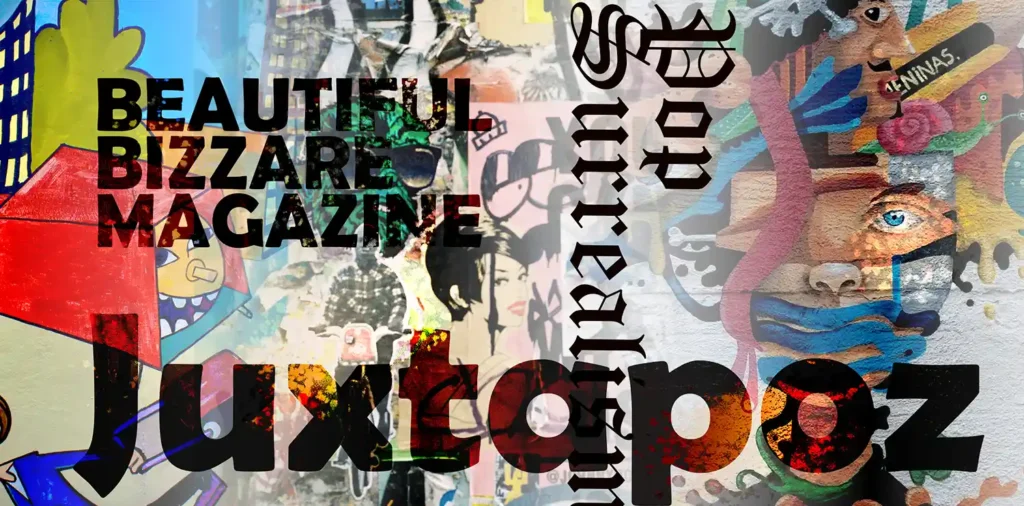
Beyond shifting the artist’s perspective, creating an inclusive space for appreciation was absolutely crucial for the growth of this movement. This was especially vital given that, initially, the playground for Pop Surrealism was neither as vast nor as privileged as that of conventional art forms. To understand how this movement achieved global resonance, we must re-examine the pioneering media outlets that consistently championed and provided a stage for Pop Surrealism artists from their very inception.
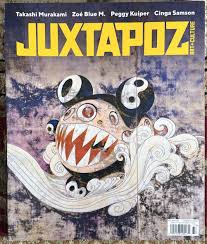
In the early 1990s, a new artistic wave erupted from underground comic circles, characterized by an eccentric, highly satirical aesthetic that stood in stark contrast to high art conventions. This subversive, mainstream-defying movement expanded exponentially, largely catalyzed by the launch of Juxtapoz magazine in 1994. Founded by Robert Williams, Greg Escalante, and Fausto Vitello, the name “Juxtapoz” was chosen as a direct nod to the spirit of juxtaposition that defines the genre’s core.
Juxtapoz became a vital vehicle, offering massive exposure while serving as a living archive for the evolution of Pop Surrealism artists—spanning from emerging talents to established figures. Notably, in a 2006 article, Robert Williams claimed he deliberately coined the term “Lowbrow” to establish an ideological counter-position to High Art. This is corroborated by his 1979 book, The Lowbrow Art of Robt. Williams, where the term originally surfaced spontaneously. By consistently elevating street art, graffiti, illustration, and tattoo culture, Juxtapoz disrupted mainstream art norms through an eclectic, boundary-pushing curation. Through in-depth interviews exploring artists’ backgrounds and creative processes, the magazine functioned not just as a promotional platform, but as an educational medium that expanded the horizons of its global readership.
Emerging in 2005 as a formidable challenger in alternative art publishing, Hi-Fructose was co-founded by the artist duo Attaboy and Annie Owens-Seifert. Both brought unique artistic backgrounds to the table: Attaboy was a former toy designer at the corporate giant Hasbro who pivoted to focus on his own fine art studio, while Annie Owens-Seifert was an artist deeply influenced by classic horror cinema and melancholic character narratives.
Driven by a shared vision to dismantle the gatekeeping of conventional galleries, Hi-Fructose deliberately bypassed the minimalist or dense conceptual frameworks characteristic of mainstream art. Instead, they curated works rooted in the everyday, the lighthearted, the sarcastic, and the absurd, while placing a paramount emphasis on exquisite, precise, and powerful technical skill. They successfully elevated comic culture, toy art, and illustration to the same echelon as installation or conceptual art. Reading Hi-Fructose is an immersive visual journey into alternative worlds meticulously constructed by their creators.
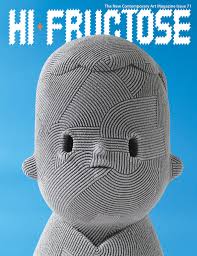
Founded by Danijela Krha Purssey and Richard Purssey, Beautiful Bizarre Magazine was born from a similar restlessness: the necessity for alternative exhibition spaces outside an often exclusive mainstream art world. Growing organically alongside its community, the magazine has become a steadfast champion for what they term New Contemporary Artists.
Beyond digital and print publications, they consistently host the annual Beautiful Bizarre Art Prize. Their curatorial identity is distinct and highly specific, focusing on high technical mastery, dark and magical themes, unconventional or absurd fashion, and surreal photography. Three words perfectly encapsulate the magazine’s essence: Elegant, Gothic, and Sophisticated. Furthermore, its premium print quality elevates each issue into a collectible art book.
While the previous three publications focus on fine art appreciation and artist profiles, MAD Magazine operates in an entirely different lane. Its primary focus is dismantling pop culture through high-level satire and sharp sarcasm. Rather than prioritizing conventional aesthetic beauty, it highlights bold comics and humor that critique social and political realities.
Nevertheless, I include MAD Magazine as a foundational pillar that profoundly influenced the Lowbrow and Pop Surrealism movements due to their shared cultural energy. For me personally, this magazine holds a deeply sentimental place; I was an avid reader during my school years. My mind was frequently sparked by their caricatured, irreverent visuals and their clever use of distinctive symbols to lampoon political figures. It was through this magazine that I realized a vital manifesto: art can be subversive, art can be funny, bizarre, and raw all in the same breath.
Looking back, Pop Surrealism works in the modern or early contemporary eras were often dismissed as anomalies, alien to the mainstream art historical narrative. This rejection did not stem from a lack of artistic merit. Rather, it was a direct consequence of a dominant High Art hegemony whose narrative heavily monopolized conventional institutions and galleries.
Yet, history is always written by those brave enough to swim against the current. Underground communities on the West Coast of the United States boldly forged a new manifesto today known as New Contemporary Art. They shattered boundaries with a comic-infused, illustrative approach that never compromised on rigorous technical mastery. Slowly but surely, bolstered by the consistent visual education provided by publications like Juxtapoz, Hi-Fructose, Beautiful Bizarre, and MAD Magazine, Pop Surrealism claimed its rightful place on the global stage.
Interestingly, in today’s digital landscape, the movement is experiencing a powerful renaissance. The art market is increasingly driven by a new generation of collectors, including Gen-Z, who grew up immersed in internet culture, gaming, and pop iconography. For them, the Pop Surrealism aesthetic is no longer an alternative form of art—it is their mother tongue. The rebellious spirit that once operated in basements has returned as a highly sought-after phenomenon in international galleries.
As an artist, this shift is more than just a market trend; it represents a liberated space to explore ideas. Yet, a larger question remains: Can this phenomenon be classified as a massive new art movement, and can we truly call it the Zeitgeist of our time?
I leave this philosophical question entirely to you—the art observers, the appreciators, and the readers of this text.
Let’s Connect!
Art never truly finishes on the canvas; it lives on through dialogue. If you have a different perspective or wish to discuss the future of Pop Surrealism and contemporary art further, please feel free to reach out via my social media to say hello or exchange ideas. It is a pleasure to connect and share perspectives with you.
See you in the next conversation!

I write about art, aesthetics, philosophy,
and the ideas behind my visual work.